Planning a trip to Morocco for the first time? This Morocco Travel Guide covers the essential information you need to plan a memorable trip, from the best places to visit and the best time to travel to transportation, accommodation, food, culture, safety, money, and practical travel tips.
Morocco is one of those destinations where a single trip can feel like several vacations in one. You can explore ancient medinas, walk through colorful souks, relax on Atlantic beaches, hike in the Atlas Mountains, visit historic kasbahs, enjoy Moroccan cuisine, and spend a night beneath the stars in the Sahara Desert and you can Know Everything about Morocco Travel Blog.
The country is also easy to combine into a longer itinerary. A trip can start in Marrakech, continue through the Atlas Mountains and Ait Ben Haddou, reach the Merzouga Desert, and then continue to Fes, Chefchaouen, Tangier, Rabat, Casablanca, or Essaouira.
Whether you are planning a short city break or a two-week Morocco vacation, this guide will help you understand what to expect and how to make the most of your time.
Morocco at a Glance
Before planning the details, here are a few basics every traveler should know:
• Country: Morocco
• Region: North Africa
• Capital: Rabat
• Most visited cities: Marrakech, Fes, Casablanca, Tangier, Chefchaouen, Essaouira, Rabat, and Meknes
• Currency: Moroccan dirham (MAD/DH)
• Official languages: Arabic and Amazigh
• Commonly spoken languages: Moroccan Arabic (Darija), French, Spanish in some regions, and English in many tourist areas
• Driving side: Right
• Time zone: Morocco generally uses GMT+1, with seasonal changes around Ramadan
• Typical maximum tourist stay: Up to 90 days, depending on nationality and immigration requirements
• Main international gateways: Marrakech, Casablanca, Fes, Tangier, Agadir, and Rabat airports
Morocco’s official tourism information confirms that Arabic and Amazigh are the country’s two official languages, while French is widely understood and Spanish is particularly common in parts of northern Morocco.
Where Is Morocco?
Morocco is located in North Africa, making it one of the most accessible African destinations for travelers coming from Europe, North America, and other parts of the world.
The country has an Atlantic coastline to the west and a Mediterranean coastline in the north. Its landscape changes dramatically as you travel inland, from coastal cities and fertile plains to the Rif and Atlas Mountains and the desert landscapes of the south.
This geographical diversity is one of the main reasons Morocco is such an interesting destination.
In one trip, you can experience:
• Historic imperial cities
• Atlantic and Mediterranean beaches
• Mountain villages
• Berber/Amazigh communities
• Ancient kasbahs
• Palm-filled valleys
• Dramatic gorges
• Sahara dunes
• Traditional markets and souks
Best Places to Visit in Morocco
One of the biggest challenges when planning a Morocco tours is deciding where to go. The country has far more destinations than most first-time visitors realize.
Marrakech Morocco
Marrakech is one of the best places to start a trip to Morocco.
The famous Jemaa el-Fnaa square, the historic medina, colorful souks, palaces, gardens, and traditional riads make Marrakech an ideal introduction to Moroccan culture.
Popular things to do in Marrakech include:
• Explore Jemaa el-Fnaa
• Visit Bahia Palace
• Walk through the Marrakech Medina
• Explore the souks
• Visit the Majorelle Garden
• Enjoy a traditional hammam
• Take a day trip to the Atlas Mountains
• Visit the Agafay Desert
• Take a day trip to Essaouira
• Visit Ouzoud Waterfalls
Marrakech is also one of the most popular starting points for Morocco desert tours.
Fes Morocco
Fes is the cultural and spiritual heart of Morocco and is famous for its remarkably preserved medieval medina.
The Fes Medina is a maze of narrow streets filled with workshops, markets, mosques, historic buildings, and traditional crafts.
Don’t miss:
If you are interested in Moroccan history and traditional culture, Fes deserves a place on your itinerary.
Chefchaouen the Blue City
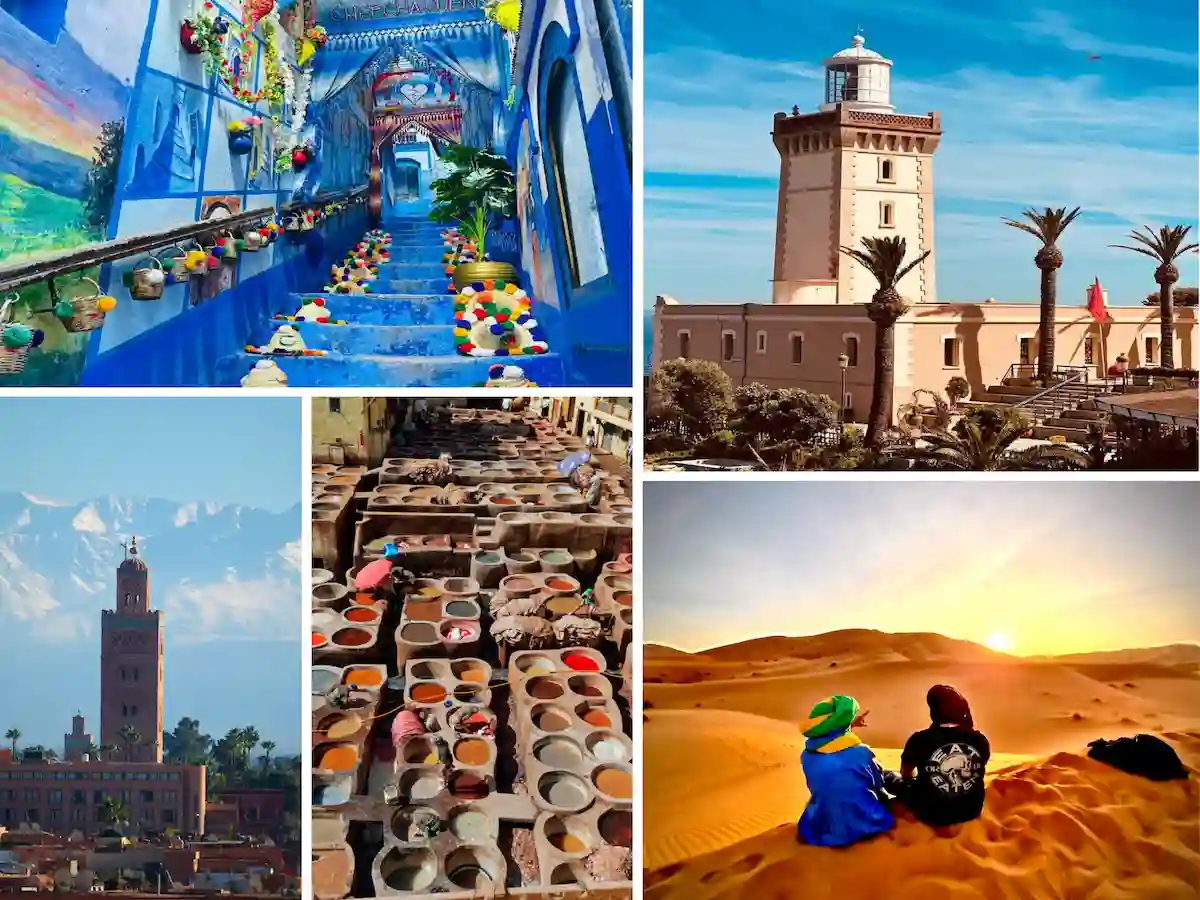
Chefchaouen is famous around the world for its blue-painted streets and buildings.
Located in the Rif Mountains, the town offers a slower atmosphere than Marrakech and Fes. It is particularly popular with travelers looking for photography, mountain scenery, traditional architecture, and relaxed walks through the medina.
Casablanca Morocco
Casablanca is Morocco’s largest city and an important economic center.
It may not have the same traditional atmosphere as Marrakech or Fes, but it is worth visiting, particularly for the spectacular Hassan II Mosque, one of the country’s most famous landmarks.
Casablanca is also a convenient arrival or departure point for many international travelers.
Tangier Morocco
Tangier sits at the northern tip of Morocco, where the Atlantic Ocean meets the Mediterranean.
Its location has given the city a unique international character for centuries.
Top attractions include:
• Tangier Medina
• Kasbah
• Cap Spartel
• Hercules Caves
• Grand Socco
• American Legation
• Atlantic and Mediterranean viewpoints
Tangier is also an excellent base for exploring northern Morocco and combining Tangier with Chefchaouen.
Essaouira, Morocco: Jewel of the Atlantic Coast
Essaouira is one of the best destinations for travelers who want a combination of history, ocean views, seafood, art, and a relaxed atmosphere.
The UNESCO-listed medina, harbor, beaches, and traditional blue-and-white architecture make Essaouira a popular addition to a Marrakech itinerary.
Ait Ben Haddou Kasbah
Ait Ben Haddou is one of Morocco’s most recognizable historic sites.
This fortified village, or ksar, is located along the historic caravan routes between the Sahara and Marrakech. Its distinctive earthen architecture makes it one of the most memorable stops between Marrakech and the desert.
Dades Gorge and the Valley of Roses
The Dades region is known for dramatic rock formations, winding mountain roads, valleys, kasbahs, and traditional villages.
It is often included in itineraries traveling from Marrakech toward Merzouga.
Merzouga Sahara Desert
For many travelers, the Sahara is the highlight of their Morocco trip.
Merzouga is famous for the Erg Chebbi dunes, where visitors can experience:
• Camel trekking
• Atv quads experience
• Buggy desert
• Sunset over the dunes
• Sunrise in the Sahara
• Traditional desert camps
• Berber/Amazigh music
• Sandboarding
• 4×4 desert excursions
• Stargazing
A night in the Sahara is one of the experiences that can turn an ordinary Morocco itinerary into an unforgettable journey.
Best Time to Visit Morocco
There is no single best month for the entire country because Morocco has several climate zones.
In general, spring and fall are among the best seasons for traveling around Morocco, especially if you want to combine cities, mountains, and desert.
Morocco in Spring: March to May
Spring is one of the most comfortable periods for exploring Morocco.
Temperatures are generally pleasant for sightseeing, road trips, and outdoor activities.
It is a particularly good season for:
✓ Marrakech
✓ Fes
✓ Chefchaouen
✓ Atlas Mountains
✓ Ait Ben Haddou
✓ Sahara Desert tours
Morocco in
Summer: June to August
Summer can be very hot in inland and desert areas.
Coastal destinations such as Essaouira, Agadir, and parts of the northern coast can be more comfortable.
If you travel to the Sahara during summer, plan activities around the cooler parts of the day.
Morocco in Fall: September to November
Fall is another excellent season for a Morocco vacation.
The temperatures become more comfortable after summer, making it a popular period for city tours, mountain trips, and desert itineraries.
Morocco in Winter: December to February
Winter can be surprisingly diverse.
Marrakech and southern Morocco can have pleasant daytime temperatures, while mountain areas can be cold and snowy.
If you want to visit the Sahara in winter, bring warm clothing for the evenings because desert temperatures can drop significantly after sunset.
Morocco’s official tourism office describes the country as having contrasting climates influenced by the Atlantic, Mediterranean, Rif and Atlas Mountains, and desert regions. It specifically highlights spring and fall as good seasons for exploring the desert.
How Many Days Do You Need in Morocco?
The ideal length depends on how much of the country you want to see.
5–7 Days in Morocco
A week works well for a focused itinerary.
For example:
Marrakech → Ait Ben Haddou → Dades Valley → Merzouga
or:
Marrakech → Casablanca → Chefchaouen → Fes → Marrakech
10 Days Morocco Vacation
Ten days gives you much more flexibility.
A popular route could include:
Marrakech → Ait Ben Haddou → Dades Gorge → Merzouga → Fes → Chefchaouen → Tangier → Casablanca
This is a good option for first-time visitors who want a mixture of cities, mountains, and desert.
14 Days Tour in Morocco
Two weeks allows you to slow down and explore more.
You could combine:
Casablanca → Rabat →Tangier → Asila → Chefchaouen → Fes → Merzouga → Dades → Ait Ben Haddou → Marrakech → Essaouira
The key is not to spend every day driving. Morocco looks compact on a map, but mountain roads and long-distance routes can take considerably longer than expected.
Morocco Travel Itinerary Ideas
7-Day Morocco Itinerary
Day 1: Marrakech and Stay in Hotel
Day 2: Marrakech to Ait Ben Haddou and Ouarzazat
Day 3: Ouarzazat to Dades Tudra
Day 4: Dades Valley to Merzouga
Day 5: Merzouga
Day 6: Explore Sahara Desert Experience
Day 7: Merzouga to Marrakech or continue to Fes
Plan your 7 Days tour from Marrakech to Merzouga
10-Day Morocco Itinerary
Day 1: Marrakech
Day 2: Marrakech to Tudra Gorges
Day 3: Dades to Merzouga Sahara Desert
Day 4: Explore Merzouga Desert
Day 5: Desert to Fes
Day 6: Fes Guided tour
Day 7: Fes to Chefchaouen
Day 8: Fes to Tangier
Day 9: Tangier to Casablanca via Asila
Day 10: Casablanca to Marrakech
If you like this 10 Days Morocco tour From Marrakech to Merzouga Contact u
14-Day Morocco Itinerary
Day 1: Arrival in Casablanca
Day 2: Casablanca to Tangier
Day 3: Tangier to Chefchaouen
Day 4: Chefchaouen to Fes
Day 5: Fes guided tour
Day 6: Fes to Sahara Desert
Day 7: Merzouga excursions
Day 8: Merzouga to Todra Dades
Day 9: Dades to Ouarzazat
Day 10: Ouarzazat to Marrakech
Day 11: Marrakech guided tour
Day 12: Marrakech to Essaouira
Day 13: Essaouira to Casablanca
Day 14: Casablanca to Airport
Exploer our 14 days Morocco grand tour from Casablanca
For longer trips, consider adding Tangier, Meknes, Ifrane, Agadir, or the Atlantic coast.
Things to Do in Morocco
There are countless things to do in Morocco, whether you are interested in history, culture, nature, food, adventure, or simply relaxing. One of the best ways to experience the country is to combine its historic cities with its mountains, coast, and desert landscapes.
In Marrakech, explore the historic medina, walk through the souks, visit Bahia Palace and enjoy the atmosphere of Jemaa el-Fnaa. You can also take a day trip to the Atlas Mountains, visit the Agafay Desert, or explore the nearby Ourika Valley and Ouzoud Waterfalls.
History and culture lovers should spend time in Fes, where you can explore the ancient medina, traditional workshops, historic madrasas, and local markets. In northern Morocco, walk through the blue streets of Chefchaouen, discover the historic medina of Tangier, and visit Cap Spartel and the Caves of Hercules.
For travelers looking for adventure and spectacular scenery, crossing the Atlas Mountains and visiting Ait Ben Haddou, Dades Gorge, and the Todra Gorge are unforgettable experiences. One of the most popular things to do in Morocco is also spending a night in the Merzouga Desert, where you can ride a camel across the Erg Chebbi dunes, watch the sunset, enjoy traditional music, and sleep under the stars in a desert camp.
Along the Atlantic coast, Essaouira and Agadir are excellent choices for travelers who want beaches, seafood, water activities, and a more relaxed atmosphere. Food lovers can also take a Moroccan cooking class, visit local markets, taste traditional tagine and couscous, and experience Moroccan mint tea.
Whether you are planning a short city break or a longer Morocco vacation, combining cultural experiences, outdoor activities, local food, and scenic road trips is one of the best ways to discover the country’s incredible diversity.
How to Get to Morocco
Most international visitors arrive by air.
Morocco has numerous airports serving different regions, including major gateways in Marrakech, Casablanca, Fes, Tangier, Agadir, and Rabat. The national tourism office also notes that Morocco can be reached by ferry from Europe.
If you are traveling from Europe, ferry connections can be particularly convenient, especially from Spain.
For travelers coming from the United States, flying is generally the most practical option, with international connections to major Moroccan airports.
When choosing your airport, think about your itinerary rather than simply choosing the cheapest flight.
For example:
+ Marrakech: best for southern Morocco, desert tours, Atlas Mountains and Essaouira
+ Casablanca: convenient for central Morocco and international connections
+ Fes: useful for Fes, Meknes, Chefchaouen and northern routes
+ Tangier: ideal for northern Morocco
+ Agadir: useful for the Atlantic coast and southern destinations
Visa and Entry Requirements for Morocco
Visa requirements depend on your nationality.
Morocco’s official tourism office states that travelers can check visa requirements and submit or track applications for an E-Visa or Electronic Travel Authorization (AEVM) through the Accès Maroc portal when applicable. The general maximum tourist stay is 90 days, although travelers should always confirm the exact rules that apply to their nationality before departure.
Before flying, check:
• Passport validity requirements
• Visa requirements for your nationality
• E-Visa or authorization requirements, if applicable
• Entry and exit rules
• Airline requirements
Do not rely on information from an old blog post because entry regulations can change.
Is Morocco Safe to Travel for Tourists
If you’re wondering whether Morocco is safe to travel to, the short answer is yes
For most travelers, Morocco is a well-established tourist destination, but visitors should use normal travel precautions and stay aware of their surroundings.
As of September 2026, the U.S. Department of State lists Morocco at Level 2: Exercise Increased Caution, citing terrorism risk.
The UK government also advises travelers to remain aware of their surroundings and highlights risks such as petty theft, scams, bogus guides, and occasional violent crime.
Practical safety tips include:
• Keep your passport and valuables secure.
• Avoid displaying large amounts of cash.
• Be careful in crowded medinas and markets.
• Use official or reputable guides.
• Be cautious with unsolicited offers of help.
• Avoid isolated areas at night.
• Keep copies of important travel documents.
• Purchase travel insurance.
• Follow local authorities’ instructions during emergencies.
This does not mean you should avoid Morocco. It means you should travel intelligently, just as you would in any major international destination.
Getting Around Morocco
Transportation is an important part of planning a Morocco trip.
Trains
Morocco has an extensive railway network connecting many major cities.
The ONCF network is particularly useful for routes such as:
Casablanca
Rabat
Tangier
Meknes
Fes
Marrakech
Morocco also has high-speed rail service connecting Tangier and Casablanca, making northern and central travel faster.
The national tourism office confirms that the rail network covers much of the country, while buses such as Supratours help connect destinations without direct rail service.
Buses
Buses can be useful for destinations that are not directly connected by train.
CTM and other companies operate intercity routes throughout Morocco.
Private Transportation
For a multi-day itinerary, private transportation can be one of the easiest options.
A private vehicle with a driver allows you to:
• Stop at viewpoints
• Visit smaller villages
• Adjust your schedule
• Avoid changing buses or trains
• Combine several destinations in one route
This is particularly useful for Morocco desert tours, where the route often includes several stops between Marrakech, Ait Ben Haddou, Dades, Merzouga, and Fes.
Rental Cars
Renting a car can give you independence, especially if you are comfortable driving abroad.
However, mountain roads, city traffic, parking, and unfamiliar road conditions can make driving more stressful than expected.
Morocco drives on the right-hand side of the road.
Where to Stay in Morocco
Morocco offers accommodation for almost every type of traveler.
Riads
A riad is a traditional Moroccan house built around an interior courtyard.
Staying in a riad is one of the best ways to experience traditional Moroccan architecture.
You will find beautiful riads throughout:
• Marrakech
• Fes
• Chefchaouen
• Essaouira
• Meknes
Hotels
International and local hotels are available in major cities and tourist destinations.
You can find everything from affordable hotels to luxury properties.
Desert Camps
If you visit Merzouga, spending a night in a desert camp is highly recommended.
Depending on your budget, you can choose between simple traditional camps and more comfortable luxury desert camps.
Moroccan Food: What Should You Try?
Morocco Food is an important part of the Moroccan travel experience.
Traditional dishes worth trying include:
Tagin
Tagine is one of Morocco’s best-known dishes.
It can be prepared with chicken, beef, lamb, vegetables, olives, preserved lemon, or other ingredients.
Couscous
Couscous is another staple of Moroccan cuisine and is traditionally served with vegetables and meat.
Tangia
Moroccan Tangia is Marrakech’s most famous traditional dish, and today it’s enjoyed all across Morocco.
Pastilla
Pastilla is a famous Moroccan pastry combining delicate layers with savory and sweet flavors.
Harira
Harira is a traditional soup commonly associated with Ramadan, although it can be enjoyed throughout the year.
Mint Tea
Moroccan mint tea is more than just a drink. It is an important part of Moroccan hospitality.
Moroccan Bread
Fresh Moroccan bread is commonly served with meals and is an essential part of everyday dining.
Moroccan Culture and Customs
Understanding a few local customs can make your trip more enjoyable.
Morocco is a Muslim-majority country with a strong tradition of hospitality.
Dress
In major tourist areas, clothing tends to be relatively relaxed, but modest clothing is generally appreciated, especially when visiting religious or traditional places.
Greetings
A simple “Salam” is a useful greeting.
A few Darija words can also make interactions easier:
✓ Salam → Hello
✓ Chokran → Thank you
✓ Afak → Please
✓ Marhaba → Welcome
✓ Beslama → Goodbye
✓ Bchhal? → How much?
The Moroccan National Tourist Office provides a useful list of common Darija expressions for travelers.
Ramadan
If you visit Morocco during Ramadan, daily life may follow a different rhythm.
Many Muslims fast from sunrise to sunset, and restaurants and businesses may adjust their schedules.
At the same time, evenings can become especially lively as families and communities gather after sunset.
Money in Morocco
The official currency is the Moroccan dirham (MAD or DH).
Banknotes commonly include 20, 50, 100, and 200 dirham denominations.
Cash is still important, particularly for:
• Small restaurants
• Souks
• Taxis
• Local shops
• Tips
• Rural areas
• Small cafés
Credit and debit cards are increasingly accepted in hotels, larger restaurants, shops, and many businesses, while ATMs are widely available in cities and tourist areas.
A good strategy is to carry some cash while keeping your main funds secure.
How Much Does a Trip to Morocco Cost?
Your Morocco travel budget depends heavily on your travel style.
A backpacker staying in budget accommodation and using public transportation will spend much less than a traveler booking luxury hotels and private transportation.
Your main expenses will usually include:
• Flights
• Accommodation
• Transportation
• Food
• Entrance fees
• Tours and Activities shopping
• Tips
A private Morocco tour generally costs more than traveling independently, but it can simplify logistics and give you a customized route with private transportation and accommodation.
For travelers who have limited time, the convenience can be worth the additional cost.
Shopping in Morocco
Morocco is famous for its handicrafts.
Popular things to buy include:
• Moroccan rugs
• Leather goods
• Ceramics
• Lanterns
• Argan Oil
• spices
• Traditional clothing
• Jewelry
• Wooden crafts
Souks are part of the experience, but remember that bargaining is common.
A friendly negotiation is usually more appropriate than an aggressive one.
If you are buying an expensive item, compare prices and quality before making a decision.
Tipping in Morocco
Tipping is common in Morocco, particularly in tourism.
You may want to tip:
• Restaurant staff
• Hotel staff
• Drivers
• Local guides
• Porters
• Desert camp staff
The appropriate amount depends on the service and situation. There is no single universal percentage that applies everywhere.
If a guide or driver has provided excellent service during a multi-day trip, a larger tip is generally appreciated.
Internet and SIM Cards in Morocco
Mobile coverage is generally good in Morocco, particularly in cities and along major routes.
Travelers can use:
• International roaming
• eSIM services
• Moroccan SIM cards
If you buy a local SIM card, make sure your phone is unlocked.
Wi-Fi is widely available in hotels, cafés, restaurants, and other tourist establishments.
For a desert trip, download important maps and travel information before leaving areas with stronger coverage.
What to Pack for Morocco
Your packing list should depend on the season and itinerary.
Essential items
• Passport
• Travel insurance information
• Comfortable walking shoes
• Lightweight clothing
• A warm layer
• Sunscreen
• Sunglasses
• Reusable water bottle
• Power bank
• Universal travel adapter
• Small backpack medication
• Copies of important documents
For the Sahara Desert
You can add:
• Warm clothing for the night
• Comfortable shoes
• Hat
• Sunglasses
• Sunscreen
• Small overnight bag
Desert temperatures can change considerably between day and night.
Is Morocco Good for Families?
Yes. Morocco can be an excellent family destination.
Children can enjoy
✓ Camel rides
✓ Beaches
✓ Desert camps
✓ Gardens
✓ Cooking experiences
✓ Wildlife and nature activities
✓ Medina exploration
✓ Mountain villages
For families, avoid making every day a long driving day. A slower itinerary with two or three nights in key destinations is often more enjoyable.
Is Morocco Good for Solo Travelers?
Morocco can also be a rewarding destination for solo travelers.
Solo visitors should use normal precautions, especially in busy medinas, transport hubs, and nightlife areas.
If you are uncomfortable navigating unfamiliar places alone, consider booking organized day trips or private transportation for longer routes.
Morocco for Couples
Morocco is particularly popular with couples.
A romantic itinerary could include:
• Marrakech
• Atlas Mountains
• Ait Ben Haddou
• Dades Valley
• Merzouga
• Essaouira
Couples can combine boutique riads, rooftop dinners, desert camps, mountain scenery, and beach stays.
Morocco Travel Tips for First time Visitors
Here are some practical lessons that can make your first Morocco trip easier.
Don’t try to see everything
Morocco is larger and more diverse than it may appear on a map.
Choose a route instead of trying to visit every famous city.
Leave time for unexpected experiences
Some of the best moments happen outside the main attractions.
A small village, local café, mountain viewpoint, or conversation with a local can become a highlight of your trip.
Wear comfortable shoes
Medinas often have uneven streets, and you may walk much more than expected.
Carry small amounts of cash
Small notes and coins are useful for taxis, cafés, tips, and small purchases.
Don’t judge distances only by kilometers
A 200 kilometer journey through the mountains can take much longer than the same distance on a highway.
Book important accommodation in advance
This is especially important during busy travel periods.
Use reputable guides
In historic medinas and major attractions, choose licensed or reputable guides rather than accepting unsolicited offers.
Learn a few words of Darija
Even a simple “Chokran” can make interactions warmer.
Respect local customs
Morocco is welcoming to tourists, but visitors should respect local culture, religion, dress, and traditions.
Buy travel insurance
Travel insurance can protect you against unexpected medical expenses, cancellations, delays, or other problems.
Is Morocco Expensive?
Morocco can be either affordable or luxurious depending on how you travel.
You can find:
• Budget hostels
• Affordable local restaurants
• Mid range hotels
• Luxury riads
• Private drivers
• Luxury desert camps
• High end resorts
This flexibility makes Morocco suitable for many different types of travelers.
One of the advantages of booking a private Morocco trip is that you can customize the level of accommodation, transportation, and activities according to your budget.
Should You Book a Morocco Tour or Travel Independently?
There is no single right answer.
Travel independently if:
• You enjoy planning
• You have plenty of time
• You are comfortable using public transportation
• You prefer maximum flexibility
• You enjoy spontaneous travel
Consider a private Morocco tour if:
• You have limited time
• You want a personalized itinerary
• You want private transportation
• You want someone to handle logistics
• You want to visit the Sahara without worrying about the route
• You are traveling with family or a group
A private tour can combine accommodation, transportation, sightseeing, local experiences, and guides into one itinerary.
For a first visit, this can make a complicated route much easier.
Popular Morocco Travel Routes
Some of the most useful routes for first time visitors include:
Marrakech to Merzouga
One of the classic Morocco desert routes.
Marrakech → Ait Ben Haddou → Ouarzazate → Dades Gorge → Merzouga
Marrakech to Fes via the Sahara
A longer route combining southern Morocco with the imperial city of Fes.
Marrakech → Ait Ben Haddou → Dades → Merzouga → Midelt → Fes
Fes to Chefchaouen
A good northern Morocco combination.
Fes → Chefchaouen → Tangier
Tangier to Marrakech
A longer cross-country route that can include:
Tangier → Chefchaouen → Fes → Merzouga → Marrakech
Casablanca to Marrakech
A simple route for travelers who arrive in Casablanca and want to explore southern Morocco.
Things You Should Experience in Morocco
If this is your first trip, try to experience more than just sightseeing.
Consider:
• Drink Moroccan mint tea with locals
• Stay in a traditional riad
• Explore a historic medina
• Eat a traditional tagine
• Visit a local market
• Take a Moroccan cooking class
• Experience a hammam
• Visit an Amazigh village
• Watch the sunset over the Sahara
• Spend a night in a desert camp
• Walk through the Atlas Mountains
• Explore traditional craftsmanship
• Take time to talk with local people
These experiences often give you a deeper understanding of Morocco than simply checking attractions off a list.
Frequently Asked Questions About Traveling to Morocco
Is Morocco worth visiting?
Absolutely. Morocco offers an unusual combination of historic cities, diverse landscapes, food, culture, mountains, beaches, and desert experiences within one country.
How many days are enough for Morocco?
Seven days can provide a good introduction, while 10–14 days allows you to experience several regions without rushing as much.
What is the best month to visit Morocco?
Spring and fall are generally excellent for combining cities, mountains, and desert. However, the best month depends on where you plan to travel.
Is Morocco safe for American travelers?
American travelers should follow current U S government travel guidance and exercise increased caution. As of September 2026, the U S Department of State lists Morocco at Level 2.
Do I need a visa for Morocco?
It depends on your nationality. Check the current Moroccan entry requirements before traveling. Morocco provides an official Accès Maroc system for applicable E-Visa and electronic travel authorization applications.
What currency does Morocco use?
Morocco uses the Moroccan dirham (MAD/DH).
Can I use credit cards in Morocco?
Yes. Cards are accepted in many hotels, restaurants, shops, and other businesses, but cash remains useful for smaller purchases and some local services
Is English spoken in Morocco?
English is increasingly common in tourist areas, especially among younger people and tourism professionals. French and Moroccan Arabic are much more widely used in everyday life.
What should I wear in Morocco?
Comfortable and modest clothing is a good choice, particularly outside major resort areas and when visiting religious or traditional places.
Is the Sahara really worth visiting?
For many travelers, yes. A Sahara experience in Merzouga can be one of the highlights of a Morocco trip, especially if you spend a night in a desert camp.
Is Marrakech or Fes better?
They are different experiences.
Choose Marrakech for lively souks, gardens, palaces, restaurants, nightlife, and easy access to southern Morocco.
Choose Fes for history, traditional crafts, medieval architecture, and one of Morocco’s most impressive medinas.
If you have enough time, visit both.
Final Morocco Travel Advice
The best Morocco trips are not necessarily the ones that visit the most places.
Instead, build an itinerary that gives you enough time to experience each destination.
Spend a few days exploring Marrakech, walk through the ancient streets of Fes, take your time in Chefchaouen, enjoy the Atlantic coast, cross the Atlas Mountains, visit Ait Ben Haddou, and, if your schedule allows, experience the Sahara near Merzouga.
Morocco is a country of contrasts. You can have breakfast in a centuries-old medina, drive through dramatic mountain landscapes in the afternoon, and watch the sun disappear behind Sahara dunes the same evening.
With the right route, comfortable transportation, realistic expectations, and a little preparation, traveling to Morocco can be much more than a typical vacation.
It can be an opportunity to experience a country through its food, landscapes, history, people, architecture, and traditions.
Plan Your Morocco Trip With Local Experts
If you are looking for a personalized Morocco vacation, private transportation, local guides, and a carefully planned itinerary, Global Morocco Tours can help you create a trip based on your interests, travel dates, and budget.
Whether you want to explore Marrakech, Fes, Chefchaouen, Tangier, the Atlas Mountains, Ait Ben Haddou, or the Sahara Desert, a private itinerary can make it easier to experience more of Morocco without spending your vacation worrying about logistics.
Ready to explore Morocco? Contact Global Morocco Tours to plan your private Morocco tour.