
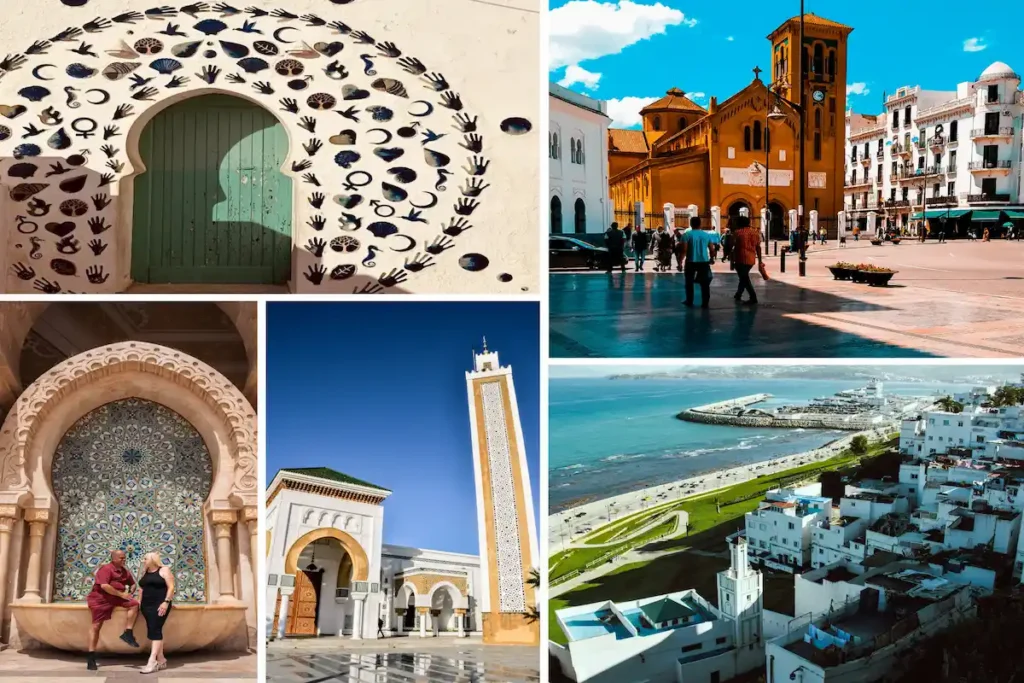
Morocco is home to a fascinating mix of cultures, architectural styles, and historical influences. Among the most interesting is the Spanish heritage found across northern Morocco, particularly in Tangier, Tetouan, and Larache. From historic theaters and elegant public squares to Spanish-influenced buildings and religious landmarks, these places reveal the long cultural connections between Morocco and Spain. Whether you are interested in history, architecture, or cultural travel, exploring these destinations offers a different perspective on northern Morocco. Morocco’s official tourism board also strongly recommends visiting these places.
In this guide, you will discover eight historic places that showcase Spanish influence in Morocco, along with practical ideas for including them in your northern Morocco itinerary.
Spanish Heritage in Morocco: A Brief Historical Background
Morocco and Spain share centuries of geographical, cultural, and historical connections. Their proximity across the Strait of Gibraltar has encouraged trade, migration, cultural exchange, and political relations throughout history.
Spanish influence is particularly visible in northern Moroccan cities such as Tetouan, Larache, and Tangier. During the Spanish Protectorate in northern Morocco, which lasted from 1912 to 1956, new neighborhoods, public squares, administrative buildings, and architectural styles transformed parts of the region.
Tetouan became the administrative capital of the Spanish Protectorate, and its Spanish-designed Ensanche district remains one of the clearest examples of this architectural legacy. Tangier, however, had a different history: it was governed under an international administration for much of the first half of the twentieth century, contributing to its cosmopolitan character and diverse architecture.
Today, visitors can explore this shared history through historic buildings, public spaces, churches, and neighborhoods that preserve elements of Spanish architecture in Morocco.
The 8 Spanish Historic Places to Visit in Morocco
Gran Teatro Cervantes in Tangier
The Gran Teatro Cervantes is one of the most recognizable historic landmarks in Tangier and an important symbol of the city’s Spanish cultural heritage. Opened in 1913, the theater was built during a period when Tangier was developing into an international and cosmopolitan city.
Its architecture reflects the European artistic influences that shaped parts of Tangier during the early twentieth century. For many years, the theater hosted performances, concerts, and cultural events, attracting audiences from different communities living in the city.
Although the building has experienced periods of decline, it remains an important part of Tangier’s architectural history. Its historic façade makes it a worthwhile stop for travelers interested in Spanish architecture, cultural heritage, and the history of northern Morocco.
If you want to explore Tangier and continue your journey toward Morocco’s beautiful landscapes and the Sahara Desert, discover our 8-day tour from Tangier to the Sahara Desert.
The Spanish Ensanche of Tetouan
The Spanish Ensanche of Tetouan is one of the most important examples of Spanish urban planning and architecture in Morocco. Located beside the historic medina, this district represents a significant chapter in the city’s modern development.
The word “Ensanche” refers to an urban expansion district, a planning concept widely used in Spanish cities during the late nineteenth and early twentieth centuries. In Tetouan, the neighborhood developed during the Spanish Protectorate and introduced broad avenues, spacious squares, apartment buildings, and European-inspired architectural designs.
Walking through the Ensanche, visitors can admire decorative façades, balconies, historic buildings, and architectural details influenced by Spanish styles, including Art Deco and neo-Moorish elements.
The district is particularly interesting because it stands alongside Tetouan’s traditional medina, creating a striking contrast between two different urban environments. Together, they help explain the city’s unique cultural and architectural identity.
To discover Tetouan as part of a longer journey through northern Morocco, the imperial cities, and the Sahara, take a look at our 12-day tour from Tangier through Morocco and the Sahara Desert.
Instituto Cervantes in Tetouan
The Instituto Cervantes in Tetouan represents the continuing cultural relationship between Spain and Morocco. Instituto Cervantes is Spain’s official cultural institution dedicated to promoting the Spanish language and Spanish-speaking cultures around the world.
Tetouan is an especially meaningful location for this institution because of the city’s historical connections with Spain, its Spanish-influenced architecture, and the presence of Spanish language and cultural traditions in the region.
For visitors interested in the cultural side of Spanish heritage in Morocco, the institute is a useful point of reference. It reflects how the historical relationship between the two countries continues through education, language, cultural activities, and artistic exchange.
You can include Tetouan in a wider northern Morocco itinerary with our 12-day private tour from Tangier, combining historic cities with some of Morocco’s most famous destinations.
Place Moulay El Mehdi in Tetouan
Place Moulay El Mehdi is one of the best-known public squares in Tetouan and an important landmark in the city’s Spanish-influenced urban center. The square is surrounded by buildings that reflect the architectural character of the Ensanche district.
One of its notable landmarks is the Church of Our Lady of Victory, built in 1919. The church is an example of the religious and architectural presence that developed in Tetouan during the Spanish Protectorate.
The square is also a pleasant place to experience everyday city life. Visitors can observe the surrounding architecture, enjoy the atmosphere, and explore nearby streets and avenues that reveal more of Tetouan’s history.
If you are planning to visit Tetouan and other historic destinations in northern Morocco, explore our private 12-day Morocco tour from Tangier.
Place Hassan II of Tetouan
Place Hassan II, also known as the Royal Palace Square, is one of the most important landmarks in the historic center of Tetouan. The square is located near the entrance to the old medina and provides an impressive introduction to the city’s architectural and cultural heritage.
The surrounding area combines traditional Moroccan influences with elements of the city’s more modern urban development. Its open space, surrounding buildings, and connection to the Royal Palace make it an important stop for anyone exploring Tetouan on foot.
From here, travelers can continue toward the medina, discover traditional markets, and explore the streets that connect Tetouan’s historic and modern districts.
Make Tetouan part of your Moroccan adventure with our 12-day circuit from Tangier through Morocco.
Place de la Libération in Larache
Place de la Libération is one of the most recognizable historic squares in Larache. It was formerly known as Plaza de España, a name that reflects the city’s historical connections with Spain.
The square is surrounded by buildings with architectural features influenced by Spanish and European styles. Its layout, façades, and lively atmosphere make it an interesting place to discover the Spanish architectural legacy in Larache.
Larache has a distinctive history shaped by its location on Morocco’s Atlantic coast and its connections with different Mediterranean and European cultures. Exploring this square offers visitors a glimpse into the city’s past and its changing identity.
Would you like to include Larache in your northern Morocco journey? Our team can help you discuss the possibility of adding this historic city to your private itinerary. You can also explore our 12-day tour from Tangier to the Sahara Desert.
The Ensanche of Larache
The Ensanche of Larache is another interesting area for travelers who want to discover Spanish-influenced architecture in northern Morocco. Like other urban expansion districts in the region, it reflects architectural and planning ideas introduced during the period of Spanish administration.
Walking through this part of Larache, visitors can notice European-inspired buildings, balconies, decorative façades, and streets that reflect the city’s historical urban development.
Larache is often less visited than Tangier or Tetouan, making it an appealing destination for travelers looking for a quieter cultural experience. Its historic neighborhoods, coastal setting, and architectural heritage offer a different perspective on northern Morocco.
If you would like to visit Larache during your trip, you can discuss adding a private stop to your itinerary. Our 12-day Morocco tour from Tangier can also be a starting point for planning your journey.
Cathedral of Our Lady of the Assumption in Tangier
The Cathedral of Our Lady of the Assumption is a Catholic cathedral in Tangier, also commonly associated with the city’s Spanish-speaking Catholic community and European religious heritage.
The building was constructed in the twentieth century and reflects the diverse communities that have contributed to Tangier’s identity over the years. Its architecture and religious importance make it an interesting stop for travelers exploring the city’s cultural and historical landmarks.
Inside, visitors can admire its religious artwork and architectural details. The cathedral is a worthwhile place to learn more about the different religious traditions and international influences that have shaped Tangier.
To discover Tangier and continue south through Morocco, explore our 8-day desert tour from Tangier.
Which Cities Should You Visit to Discover Spanish Heritage in Morocco?
If you are interested in Spanish history and architecture, three cities in northern Morocco deserve special attention: Tangier, Tetouan, and Larache. Each offers a different experience and reveals another part of the historical relationship between Morocco and Spain.
Tangier: A Cosmopolitan City with Spanish Connections
Tangier is a fascinating destination for anyone interested in the international history of Morocco. Its location near Spain and its former international status attracted people from many countries, creating a diverse architectural and cultural environment.
During your visit, you can explore the Gran Teatro Cervantes, discover historic European-style buildings, and visit important religious and cultural landmarks. Tangier is also an excellent starting point for a longer journey through Morocco.
Discover our 8-day tour from Tangier to the Sahara Desert if you want to combine the city’s history with Morocco’s beautiful landscapes.
Tetouan: The Heart of Spanish Architectural Heritage
Tetouan is one of the most important destinations for discovering Spanish architecture in Morocco. Its Ensanche district, historic squares, and cultural institutions provide a clear picture of the city’s modern history.
The city’s historic medina is also a UNESCO World Heritage Site, making Tetouan an excellent destination for travelers interested in Moroccan culture, architecture, and history.
Include Tetouan in a longer journey with our 12-day tour from Tangier through Morocco.
Larache: A Less-Visited Historic Coastal City
Larache offers a quieter experience for visitors interested in the Spanish influence in northern Morocco. Its historic squares, urban architecture, and coastal atmosphere make it an appealing destination for cultural travelers.
Although it receives fewer visitors than Tangier or Tetouan, Larache is worth considering if you want to explore beyond Morocco’s most famous tourist destinations.
Larache can be discussed as an additional stop when planning a customized northern Morocco itinerary.
How to Plan a Trip to Spanish Historic Sites in Morocco
The best way to explore Spanish heritage in Morocco is to include northern cities in a wider travel itinerary. Tangier, Tetouan, and Larache can be combined with other destinations depending on your available time and travel preferences.
If you have a few days, you can focus on Tangier and Tetouan, exploring their historic neighborhoods, architecture, and cultural landmarks. Travelers with more time can continue toward Chefchaouen, Fes, the Sahara Desert, and other Moroccan destinations.
For a more comfortable experience, a private tour with a local driver and guide can help you travel between cities, discover interesting places along the way, and organize your schedule according to your interests.
At Global Morocco Tours, we organize private Morocco tours and customized travel experiences departing from major cities across the country. Our team can help you explore northern Morocco and combine its historic cities with other destinations, including Chefchaouen, Fes, and the Sahara Desert.
Explore our 8-day tour from Tangier or our 12-day Morocco tour from Tangier to discover more of the country’s history, landscapes, and cultural attractions.
Discover Spanish Heritage in Morocco with Global Morocco Tours
Exploring Spanish heritage in Morocco is a wonderful way to understand the country’s diverse history and cultural identity. From the Gran Teatro Cervantes in Tangier to the Spanish Ensanche of Tetouan and the historic squares of Larache, these places reveal the connections that have shaped northern Morocco over generations.
Whether you are interested in historic architecture, cultural sightseeing, or a longer journey through Morocco, our team can help you plan a memorable experience.
Visit the historic landmarks of Spanish heritage in Morocco with Global Morocco Tours and discover the fascinating history shared by Morocco and Spain.
Ready to plan your trip? Contact us to discuss your itinerary and arrange a private Morocco tour.
Frequently Asked Questions About Spanish Heritage in Morocco
Where can you see Spanish architecture in Morocco?
You can discover Spanish-influenced architecture in several northern Moroccan cities, especially Tetouan, Tangier, and Larache. Tetouan’s Ensanche district is one of the most notable examples, while Tangier and Larache also preserve historic buildings and public spaces connected to Spanish influence.
Which Moroccan city has the strongest Spanish influence?
Tetouan is one of the most significant cities for exploring Spanish architectural and historical influence in Morocco. Its Ensanche district developed during the Spanish Protectorate and remains an important example of Spanish urban planning.
Is Tetouan worth visiting for history lovers?
Yes. Tetouan is an excellent destination for history and architecture enthusiasts. Visitors can explore its UNESCO-listed medina, Spanish Ensanche, historic squares, traditional markets, and buildings that reflect the city’s cultural connections with Spain.
What is the Gran Teatro Cervantes in Tangier?
The Gran Teatro Cervantes is a historic theater in Tangier that opened in 1913. It is one of the city’s most recognizable examples of early twentieth-century architecture and an important symbol of its Spanish cultural heritage.
Can you visit Tangier, Tetouan, and Larache on one trip?
Yes. These three cities can be combined in a northern Morocco itinerary. The exact route and time spent in each destination depend on your travel schedule. You can discuss a customized itinerary that includes these destinations and other places in Morocco.
How many days do you need to explore northern Morocco?
A few days can be enough to visit Tangier and Tetouan, but a longer trip gives you more time to explore additional destinations such as Larache, Chefchaouen, and Fes. You can also combine northern Morocco with a Sahara Desert experience.
Can I book a private Morocco tour from Tangier?
Yes. Global Morocco Tours organizes private Morocco tours departing from Tangier, including itineraries that combine northern cities, cultural attractions, and the Sahara Desert. Explore our 8-day Tangier desert tour and 12-day Tangier to Sahara tour.